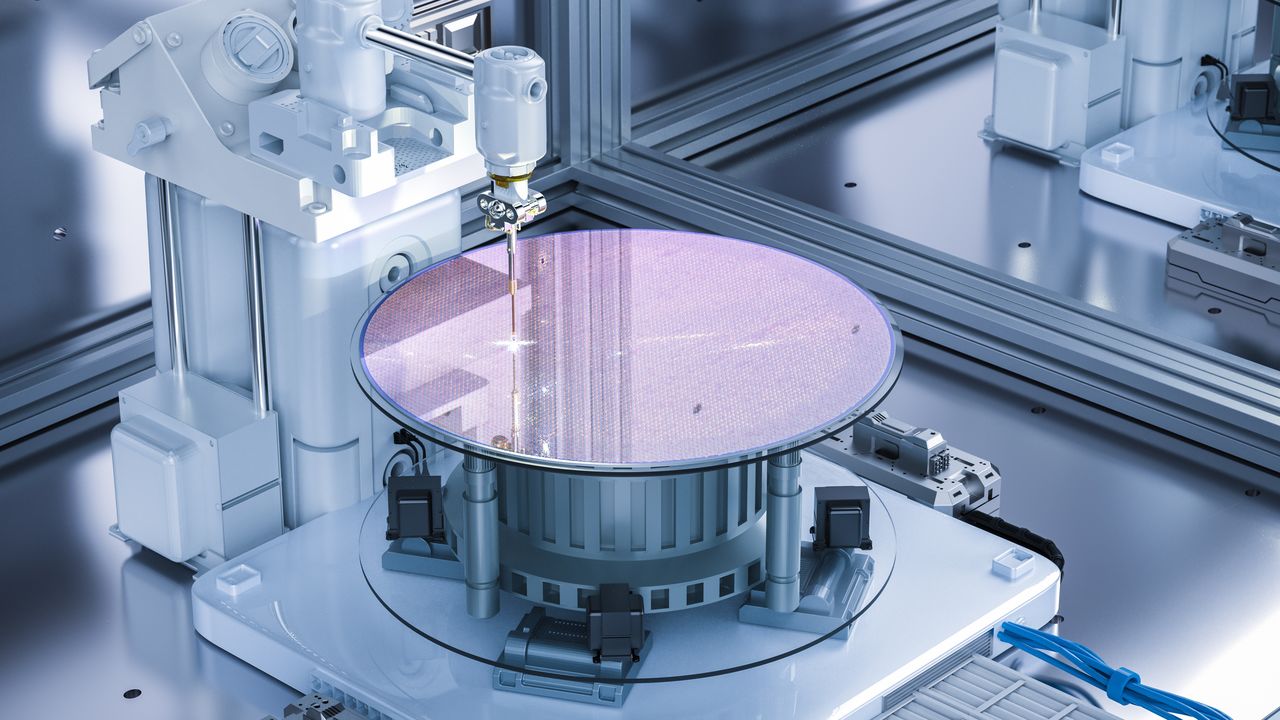
Semiconductor manufacturing involves micro- and nanoscale precision processes, from wafer lithography, etching and thin-film deposition to wafer handling, packaging and testing. Equipment operates in ultrahigh vacuum, alternating temperatures, aggressive process gases and highly controlled cleanrooms, placing stringent demands on lubricants. Conventional oils and greases can release volatile substances and particles or suffer chemical attack. Deposits on wafers can cause circuit defects and the loss of entire batches, making lubrication contamination a significant yield concern.
Semiconductor lubricants must combine extremely low outgassing, low particle generation, chemical inertness, wide-temperature stability and resistance to vacuum-process corrosion. Specialty perfluoropolyether (PFPE) greases are therefore widely used. SEIVIO's Vaculub range covers vacuum-chamber drives, wafer-handling robots, precision positioning stages, seals, valves and atmospheric-pressure cleanroom mechanisms, helping reduce failures, extend maintenance intervals and stabilize production.
Lubrication inside ultrahigh-vacuum chambers differs from lubrication of external cleanroom mechanisms. Internal components demand particularly low outgassing, total mass loss (TML) and collected volatile condensable materials (CVCM). External mechanisms primarily require low particle generation. High and low temperatures, plasma and corrosive process gases further influence selection. Vaculub products combine high-purity PFPE base oils with ultrafine PTFE thickeners; selected grades include specialty anticorrosion additives. Applications include etchers, PVD/CVD systems, ion implanters, ALD systems, wafer robots, lithography equipment, vacuum valves, pumps, probe stations and packaging equipment.
Operating range: -30~280°C. Its linear PFPE formulation offers very low vapor pressure and resistance to aggressive process gases. It is a general-purpose choice for semiconductor process chambers, including PVD, CVD, etching, ion implantation and ALD equipment. Applications include gate-valve shafts, flange O-rings, vacuum valves and chamber bearings. It also serves high-temperature sealing points in diffusion furnaces and vacuum ovens and moving pairs inside lithography chambers, limiting condensable contamination and resisting plasma exposure during continuous production.
Operating range: -50~250°C. Good low-temperature starting, extremely low vapor pressure and corrosion resistance suit wafer-sorting robots, vacuum-transfer arm joints and small precision chamber bearings subject to frequent starts and alternating low-temperature/vacuum conditions. In 300 mm and 200 mm wafer-handling mechanisms, it reduces operating torque, fretting and particle generation, supporting repeatable gripping and transfer. It is also used in vacuum-drive components of deposition equipment.
Operating range: -40~230°C. Low oil separation and shear stability suit semiconductor multi-axis vacuum stages, probe-station platforms, and vacuum lead screws and linear guides in inspection equipment. It remains in place during reciprocation, maintains the film and limits oil bleeding and condensable contamination, supporting micrometer-scale positioning.
Operating range: -40~220°C. Developed to control particles and volatiles, it serves both selected medium-vacuum drives and atmospheric-pressure cleanroom mechanisms. Applications include wafer-transfer rails, packaging-machine sliders and test-equipment shafts in Class 10-100 cleanrooms, particularly precision sliding and rolling pairs in back-end packaging and testing.
This ultra-low-outgassing product is intended for advanced equipment with exceptionally strict contamination limits, including advanced-process vacuum robots, precision optical vacuum components, supporting EUV equipment and high-precision inspection chambers. It minimizes organic volatile contamination and can also lubricate positioning mechanisms in semiconductor ultrahigh-vacuum analytical instruments.
Operating range: -20~250°C. Favorable TML and CVCM performance suits vacuum-coating equipment and semiconductor vacuum-furnace components, including coating-system gate valves and furnace sealing bearings. It balances vacuum performance and cost in intermittent production equipment and volume-production coating lines.
For atmospheric-pressure cleanroom equipment rather than high-vacuum chambers, this grade emphasizes low particle generation. Applications include wafer conveyors, rack-and-pinion drives, sliders, worm gears and external screws and shafts in packaging, sorting and testing. It limits lubricant-generated particles suspended in cleanroom air.
Apply fluorinated grease thinly: excessive amounts increase bleeding and evaporation risks. When changing lubricants, thoroughly remove old grease and contaminants and clean the friction pairs with an appropriate cleaning agent to avoid secondary contamination.
Semiconductor lubrication requires a coordinated solution rather than simply a heat-resistant grease. Vaculub grades address high and low temperatures, ultrahigh vacuum and atmospheric cleanrooms across front-end chambers, wafer transport and back-end packaging and testing. They provide domestic alternatives to comparable imported fluorinated products and address outgassing, particles, wear and sticking, helping lower maintenance costs and protect chip yield.













 粤公网安备44040202001700号
